Gorilla Position — Week of August 17, 2026
Wrestling in 2026 has a strange habit of burying its most compelling stories underneath its loudest ones. This week, the real conversation isn’t happening inside any ring — it’s happening on podcasts, at press conferences in Japan, and in the fallout from a chair-stacking controversy that somehow became a referendum on nepotism, dues-paying, and what it actually means to be a wrestler. Pay attention to the edges this week, because that’s where everything interesting is living.
The Avery Styles Situation Is About More Than One Kid Not Moving Chairs
The story on its surface is almost comedic: a promoter complains that AJ Styles’ son didn’t help set up chairs at a GCW show in Minnesota, Natalya praises Avery publicly, and suddenly half the wrestling internet has opinions about a teenager. But AJ Styles’ response — that his son and Marcus Mathers were never actually asked to help with the ring setup — reframes the whole thing considerably, and it matters that he says he verified this before speaking publicly. Either Arik Cannon has a legitimate grievance about indie culture being eroded by the sons of WWE Hall of Famers who treat the grassroots circuit as a showcase rather than a community, or this is a promoter who saw a chance for visibility and took a swing at a famous last name. What makes this genuinely worth discussing is the broader tension it exposes: the independent wrestling scene has always run on unwritten codes of conduct, and those codes get complicated when the person coming through the door has a famous father who is simultaneously producing matches for the biggest company on the planet. AJ Styles saying “all I had to do was let them loose” about producing Avery’s WWE debut while also defending him against an indie promoter in the same week is a fascinating kind of dual existence that only wrestling produces. The chair story will fade, but the question of how legacy acts and their children reshape the indie ecosystem is one that isn’t going away.
Ryohei Oiwa Winning the G1 Is the Best Wrestling Story Running Right Now
While WWE and AEW are deep in their respective premium live event seasons, New Japan quietly delivered the most satisfying tournament conclusion in years, and most Western fans either missed it or treated it as a footnote. Oiwa beating Yuya Uemura in the G1 Climax final and then saying “not everyone can do what Uemura and I did” at the post-match press conference isn’t arrogance — it’s two young wrestlers who have been built slowly and deliberately arriving at a moment that actually means something. The fact that NJPW has already confirmed Oiwa’s IWGP Heavyweight Title shot against Yota Tsuji at King of Pro Wrestling in October gives the next two months a clear narrative spine that WWE and AEW both struggle to maintain. New Japan is not a perfect promotion — its pacing and some of its booking decisions remain genuinely maddening — but its willingness to build toward one specific match over several months, with a credible challenger who earned his spot through a legitimate tournament, is a structure that makes the eventual payoff feel earned in a way that weekly television rarely allows. If you have not been watching the G1 this year, go find the final. It is worth your time.
Logan Paul’s Injury Recovery Is Being Handled Exactly Right, and That’s Interesting
There is a version of this story where a celebrity crossover wrestler quietly disappears for six months and returns when the marketing cycle demands it. That is not what is happening with Logan Paul. He is posting about platelet-rich plasma therapy, being explicit that he is “very much injured,” and walking fans through a recovery process in real time — and whether you find him irritating or genuinely compelling as a performer, this approach is smart for everyone involved. It keeps him present in the conversation without putting him in a position where he has to deliver physically before his body is ready, and it reinforces something WWE has been trying to establish about him for two years: that whatever else Logan Paul is, he takes the wrestling seriously. The torn triceps happened during a tag title defense against The Street Profits, which is not a small moment to get hurt in, and the fact that he has not used the injury as an exit ramp from the business says something. The more interesting question is what WWE does with Austin Theory in the interim, because tag title pictures tend to quietly collapse when one half of the team disappears, and Theory is too good a performer to be left in a holding pattern waiting for his partner to heal.
Kevin Nash Checking Out of WWE Is Worth Taking Seriously, Even If His Reasoning Is Messy
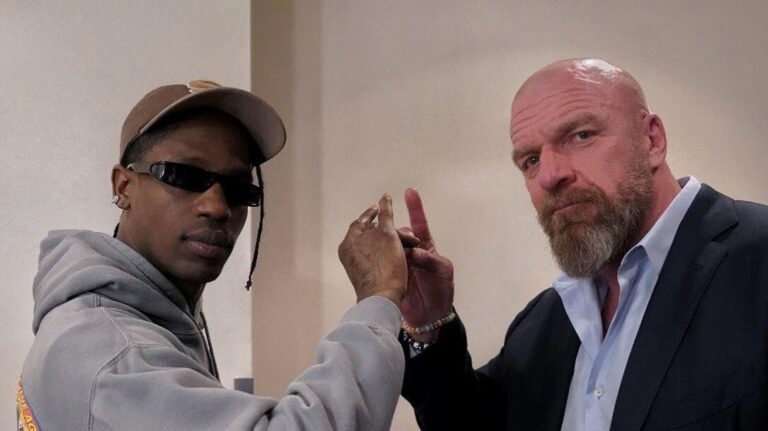
Nash saying WrestleMania soured him on WWE and that he’s barely watching anymore is easy to dismiss as an old man yelling at a cloud — and some of his commentary this week, particularly the Triple H and political photos takes, is exactly that kind of noise. But the WrestleMania observation deserves a moment of honest engagement. WrestleMania has become so large, so produced, and so thoroughly a mainstream entertainment event that its connection to wrestling as a craft has become genuinely strained, and Nash — whatever his faults as a commentator — spent decades inside the machine and knows what it felt like when the show meant something different. His parallel comment that he’s now interested in AAA because of The Undertaker and Jeremy Borash’s involvement is the more revealing admission: he’s not done with wrestling, he’s just looking for it somewhere else. That pattern — longtime WWE loyalists gravitating toward alternatives not out of tribalism but out of genuine curiosity — is something worth tracking. The audience that grew up with Nash is aging alongside him, and where their attention lands over the next few years has real commercial implications that nobody is talking about clearly enough.
The Royal Rumble Going Two Nights Would Be a Mistake, and JBL Knows It
JBL arguing that a two-night Royal Rumble makes sense because WrestleMania and SummerSlam have already done it is exactly the kind of logic that sounds reasonable until you think about it for thirty seconds. The Royal Rumble works because it is one specific thing: a contained, escalating, unpredictable event with a clear structural payoff at the end. WrestleMania sprawls across two nights because it is a variety show built around spectacle. The Rumble is a mechanism, and mechanisms do not benefit from being stretched. Splitting the Rumble across two nights would either mean running two separate Rumble matches — which dilutes the concept immediately — or padding one night with undercard matches that exist purely to fill time, which is how you teach an audience that your premium events are not actually premium. The two-night format has already created a strange inflation problem where every major WWE show now feels like it needs to justify an expanded runtime, and the Rumble is the one property left that still has the discipline of a single-night structure. Leave it alone.
The week of August 10 was not defined by any single enormous angle or shocking return. It was defined by conversations happening in the margins — about who owes what to independent wrestling, about a young Japanese wrestler who earned something real, about what happens when the biggest events in the business keep getting bigger without getting better. Wrestling has always been at its most interesting when the small stories carry the weight, and right now, the small stories are doing serious lifting. The chair thing will be forgotten in a month. Oiwa versus Tsuji in October will not.