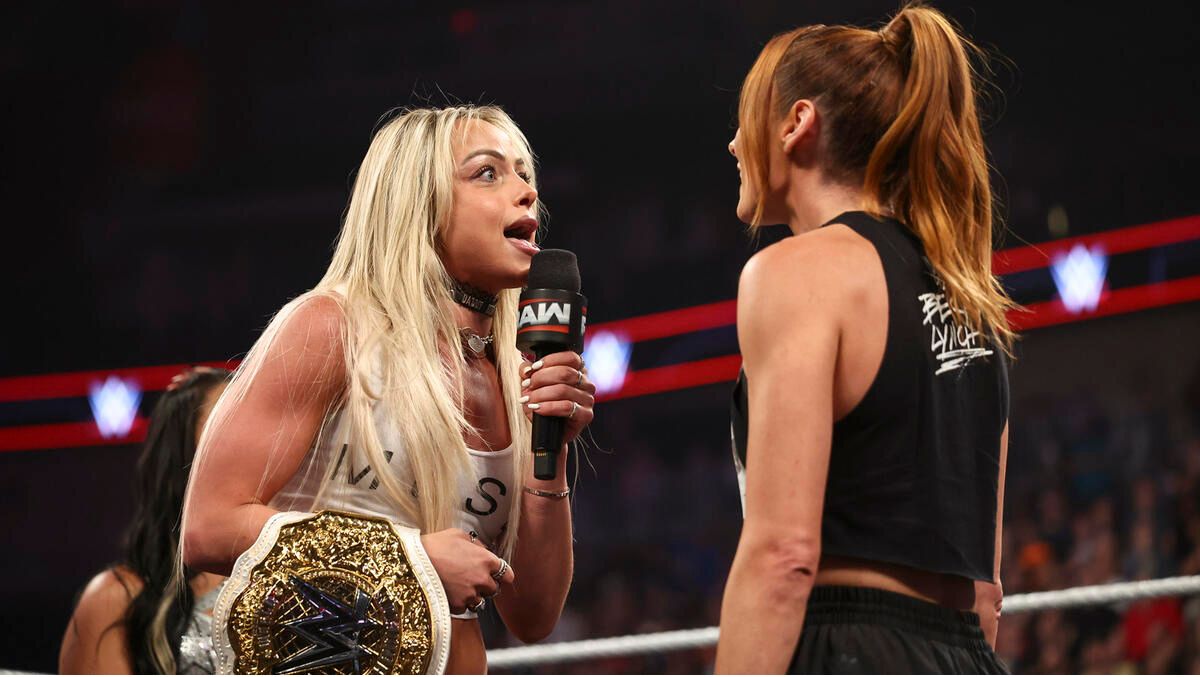
Becky Lynch has acknowledged that WWE storylines, while scripted, frequently draw on real-life animosity between performers to make the product feel authentic. Lynch made the comments during an appearance on the podcast “So U Think U Can Sports?” with Eliot Glazer, where she was directly asked why fans and critics describe WWE as scripted.
“Because it is [scripted],” Lynch responded, according to both F4W Online and eWrestlingNews, which separately reported on the interview. Lynch went on to explain that WWE often interweaves real tensions between talent into its television narratives, which she said makes it difficult for outsiders to distinguish between what is genuinely happening between wrestlers and what has been written for the show.
The admission from Lynch offers a rare bit of insight from a top WWE star into how the promotion’s creative process can intersect with actual relationships among the roster. Rather than denying the predetermined nature of professional wrestling outcomes, Lynch instead framed the scripted label as only part of the picture, suggesting that the emotional authenticity fans often respond to can stem from real disputes being folded into televised storylines.
Lynch has long been one of WWE’s most prominent ambassadors for explaining the nuances of the business to mainstream audiences, and her comments on “So U Think U Can Sports?” continue that pattern. By acknowledging that real-life animosity can inform on-screen rivalries, she sheds light on a long-debated aspect of the industry: the idea that the most compelling characters and feuds often have a kernel of truth behind the performance.
Neither F4W Online nor eWrestlingNews reported Lynch naming any specific storyline, rivalry, or fellow performer in connection with her remarks, and no further detail was provided about which angles she may have been referencing. The interview did not touch on any particular current WWE program, leaving her comments as a general reflection on how the company operates rather than a pointed claim about an active feud.
Lynch’s willingness to speak candidly about the overlap between scripted drama and genuine backstage dynamics adds to the broader conversation among wrestlers and journalists about how much of WWE’s product is manufactured versus organically influenced by real relationships. Her remarks, as relayed through the two outlets, stop short of identifying any individual case, but they reinforce a perspective increasingly voiced by performers themselves about the blurred line between kayfabe and reality in modern WWE programming.