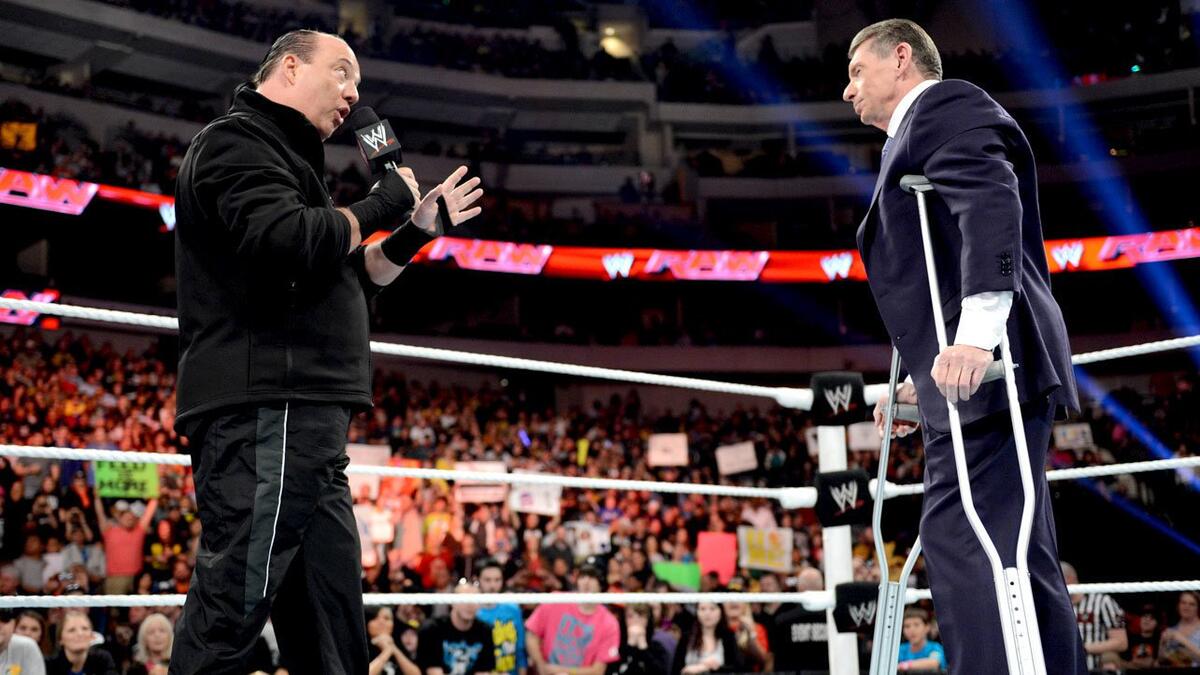
Paul Heyman has given one of his most candid public assessments yet of Vince McMahon, telling broadcaster Graham Bensinger during an appearance on “In Depth with Graham Bensinger” that his former boss is “not a good man” and describing him as a “dictator.” The comments came as part of a wide-ranging interview in which Heyman reflected on decades of working alongside and under McMahon in WWE.
Asked directly whether McMahon is a good man, Heyman did not give a simple answer. He first called McMahon a “supremely complicated human being of great accomplishment” before Bensinger pressed further, at which point Heyman stated plainly that McMahon is not a good man. Heyman also said he does not believe McMahon ever considered himself to be a good man in the first place, suggesting the former WWE chairman was clear-eyed about the kind of leader and businessman he chose to be.
Heyman went on to detail how McMahon’s relentless approach to running WWE affected the people who worked for him. According to Heyman, McMahon exploited employees once he identified how much he could extract from them, pushing people until, in Heyman’s words, their “wheels fell off.” It was a portrait of a boss whose ruthless business instincts came with a real personal cost to his workforce over the years.
The interview also revisited one of the most painful chapters of Heyman’s WWE career: the 2006 relaunch of ECW under the WWE banner. Heyman described that stretch as “the most miserable six months” of his career, and in a separate part of the conversation, Ringside News reported that Heyman accused McMahon of taking pleasure in dismantling the creative vision Heyman had spent years building around the original ECW brand. Heyman’s account suggests the revival’s failure was not simply a business misstep but a source of lasting personal frustration tied directly to McMahon’s involvement.
By contrast, Heyman offered a notably different take on Paul Levesque, WWE’s current head of creative, describing him as “not a dictator” but rather “a collaborator,” a direct contrast to the characterization he gave of McMahon.
On the question of whether he and McMahon might ever reconnect, Heyman was clear that the two are now living very different lives and that rekindling contact with his former boss is not something on his mind. The comments paint a picture of a relationship that, while historically significant to both men’s careers, has effectively concluded with no indication from Heyman of an interest in revisiting it.