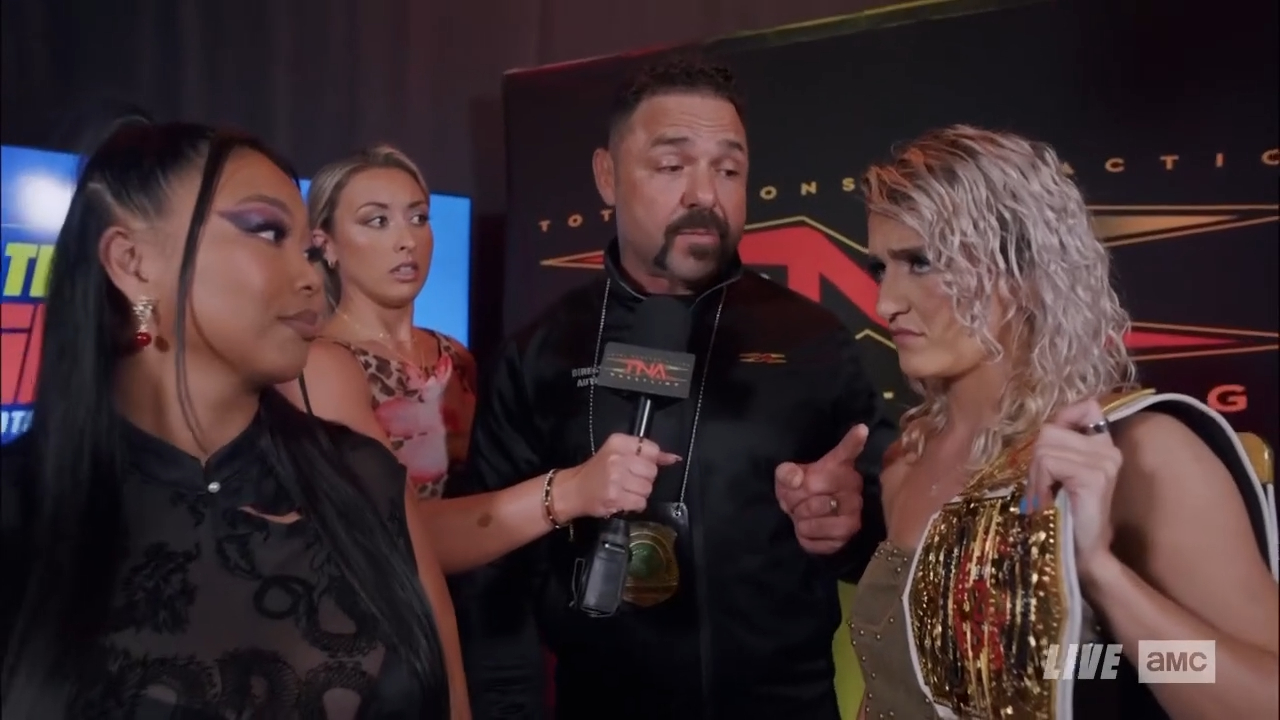
Santino Marella says the defining difference between TNA Wrestling and its bigger rivals, WWE and AEW, comes down to creative freedom. Speaking to We R Wrestling, Marella argued that TNA’s product benefits from a looser, less polished approach that allows performers more latitude to shape their own characters and matches.
“TNA is not overproduced, we have more freedom,” Marella said, according to the interview cited by Fightful, F4W Online, and NoDQ. He expanded on that idea by explaining that talent on the TNA roster are given leeway to develop creatively, rather than working within the tightly controlled frameworks often associated with WWE and AEW programming.
Marella has spent the past several years with TNA in an authority-figure role, becoming one of the promotion’s most recognizable ambassadors in that capacity. He recently signed a new contract with the company, a move that underscores his continued involvement both on-screen and in representing TNA’s brand identity to media and fans.
His comments arrive at a moment when TNA has increasingly positioned itself as a distinct alternative in the North American wrestling landscape, drawing comparisons to the two dominant promotions in the industry. By framing TNA’s relative lack of heavy production polish as a strength rather than a limitation, Marella is making the case that the company’s identity is built around performer autonomy and a more organic presentation, rather than attempting to match WWE or AEW on scale alone.
As a veteran with decades of experience across multiple major promotions, Marella’s perspective carries weight when he draws contrasts between TNA and the companies he has also worked within or alongside over his career. His remarks did not include specific examples of matches or storylines affected by this creative freedom, but the general sentiment reflects a broader narrative TNA has leaned into as it continues to build its roster and programming identity under its current ownership and television deal.
Marella’s new contract and continued role as an on-screen authority figure suggest TNA intends to keep leaning on his voice, both in-ring and in media appearances, as part of how it communicates its brand positioning relative to WWE and AEW going forward.