
Hulk Hogan turns heel at Bash at the Beach to form the New World Order
Thirty years ago tonight, Hulk Hogan didn’t just turn heel—he detonated the entire architecture of professional wrestling. The Bash at the Beach in Denver was supposed to be Hogan’s coronation, another victory lap in a career that had already rewritten the industry twice over. Instead, with Savage’s back turned after a missed elbow, Hogan dropped the leg on his own partner, and in that moment of betrayal, he joined Scott Hall and Kevin Nash as the third pillar of an invasion angle that WCW had been building in whispers and shadows for weeks. The Outsiders had arrived six weeks earlier, but that night Hogan made it matter—he gave the nWo a name, a uniform, and most crucially, the biggest star in wrestling history as its leader.
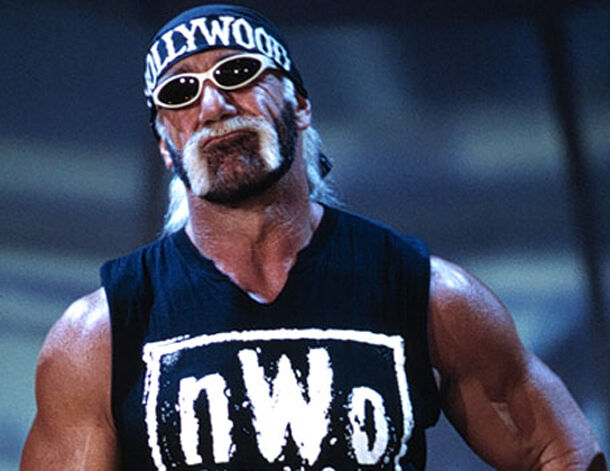 What made the turn seismic wasn’t just that Hogan went bad; it was how badly WCW needed him to. The company had been chasing Monday night dominance since 1995, bleeding credibility and audience to Raw. Hogan, forty-two years old and seemingly past his prime, had returned to WCW in ’94 as a nostalgia play, and the novelty had curdled. By putting the belt on Hogan at Bash, then immediately having him join what appeared to be a foreign army, Eric Bischoff and the creative team made a calculation that the audience had grown tired of the red and yellow and ready for something genuinely unpredictable. The crowd’s confusion—that delayed, stunned silence before the heat—told you they’d succeeded in ways WCW rarely did.
What followed was a fourteen-month run where WCW actually won the Monday Night Wars, where nWo shirts outsold everything in wrestling, where casual fans tuned in again because the territory felt dangerous. But Hogan’s turn was also the moment WCW’s ceiling became visible. By 1997, the angle was already showing wear, the story dependent on hot-shotting matches and titles rather than coherent narrative. The company would eventually choke on its own boom, unable to build beyond the nWo mystique or push past the first tier of Hogan, Hall, and Nash without feeling secondary. It’s a paradox worth sitting with: the angle that saved WCW in the short term may have guaranteed its long-term irrelevance, teaching the entire industry that stardom and spectacle could mask structural rot—a lesson that still determines how wrestling companies build and burn their biggest angles today.