
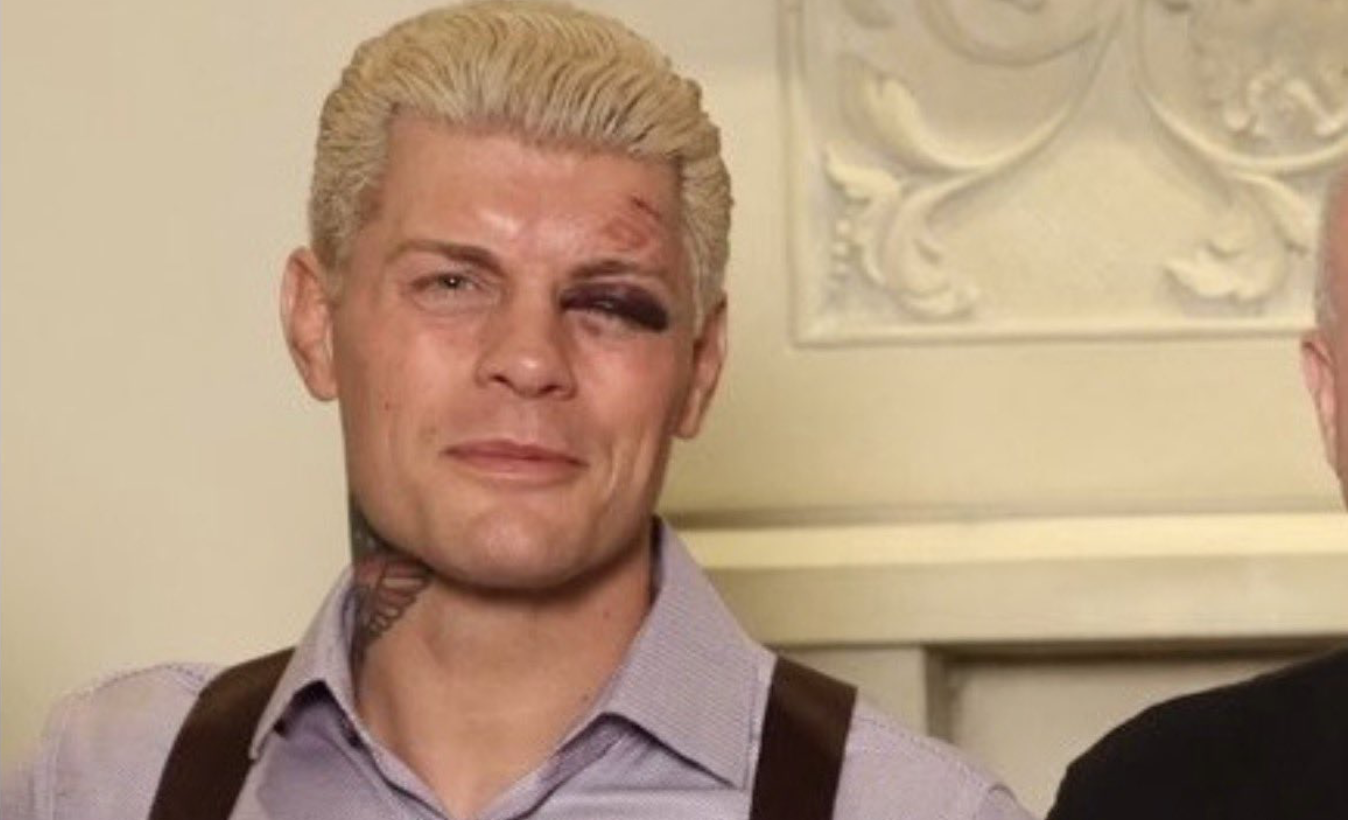
Cody Rhodes says the orbital injury he suffered during his WrestleMania 42 title defense against Randy Orton was worse than originally understood, and that its effects lingered well after he returned to the ring. Rhodes made the comments during an appearance on Chris Van Vliet’s Insight podcast, published on October 22, 2026.
Rhodes retained the Undisputed WWE Championship against Randy Orton at WrestleMania 42, but the match left him with his eye swollen shut. At the time, the injury was treated as a notable but short-term setback. Rhodes took roughly two weeks off from in-ring competition before returning to action on SmackDown.
Speaking with Van Vliet, Rhodes clarified that he had suffered a minor orbital fracture as a result of contact with Orton during the match. He explained that the fracture affected his peripheral vision and, in his own words, “super slowed down” his work in the ring in the weeks that followed. Rhodes indicated that he still feels some lingering effects from the injury.
The disclosure adds new context to a match that was already considered one of the physically demanding highlights of WrestleMania 42. While the swollen eye was visible to fans and commentators at the time, the extent of the structural damage, a fracture rather than simple swelling or bruising, was not previously made public in detail. Rhodes’ comments suggest he wrestled through the injury rather than addressing it with extended time away from the ring.
Rhodes’ decision to return to SmackDown just two weeks after the injury, despite dealing with impaired peripheral vision, underscores how quickly top champions are often expected to resume television duties following high-profile pay-per-view matches. His comments do not specify any particular match or storyline where the lingering effects were most apparent, nor do they indicate any further medical treatment beyond the initial recovery period.
As of the interview, Rhodes remains the Undisputed WWE Champion following his victory over Orton at WrestleMania 42. No further details on ongoing treatment, additional time off, or a resolution to the lingering symptoms were disclosed in the interview excerpts made available.